

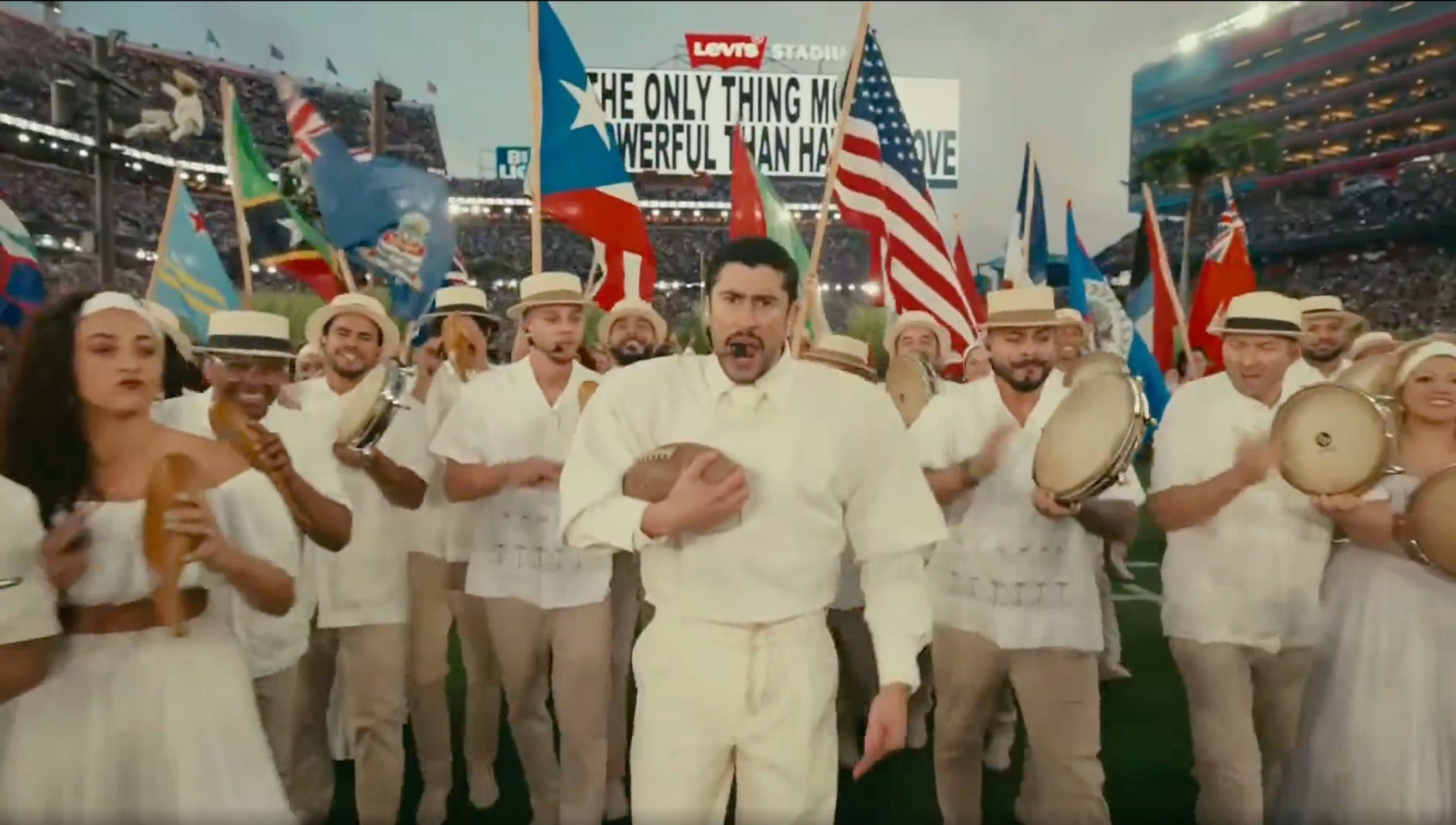
It was the most powerful moment of Bad Bunny’s historic Super Bowl halftime show on Sunday. Gazing at a football in his hands, he said: “God bless America!” Then he walked toward the camera while naming every country in the Americas.
As millions watched from across the globe, the Puerto Rican singer transmuted that phrase, widening its borders until it meant something new and beautiful. Behind him were a sea of flags and a billboard with a line from his recent acceptance speech at the Grammy Awards: “The only thing more powerful than hate is love.”
Related: How Bad Bunny Became America’s Most Dangerous Artist.
President Trump immediately called the show “one of the worst, EVER!” Other conservative pundits complained about it being in Spanish. (It was the first halftime show almost entirely in Spanish.) What the MAGA movement found intolerable was the vision of America it presented: multilingual, multiracial, and irreducibly shared. The real America. It exposed the smallness of Trump’s delusions. And it was gorgeous.
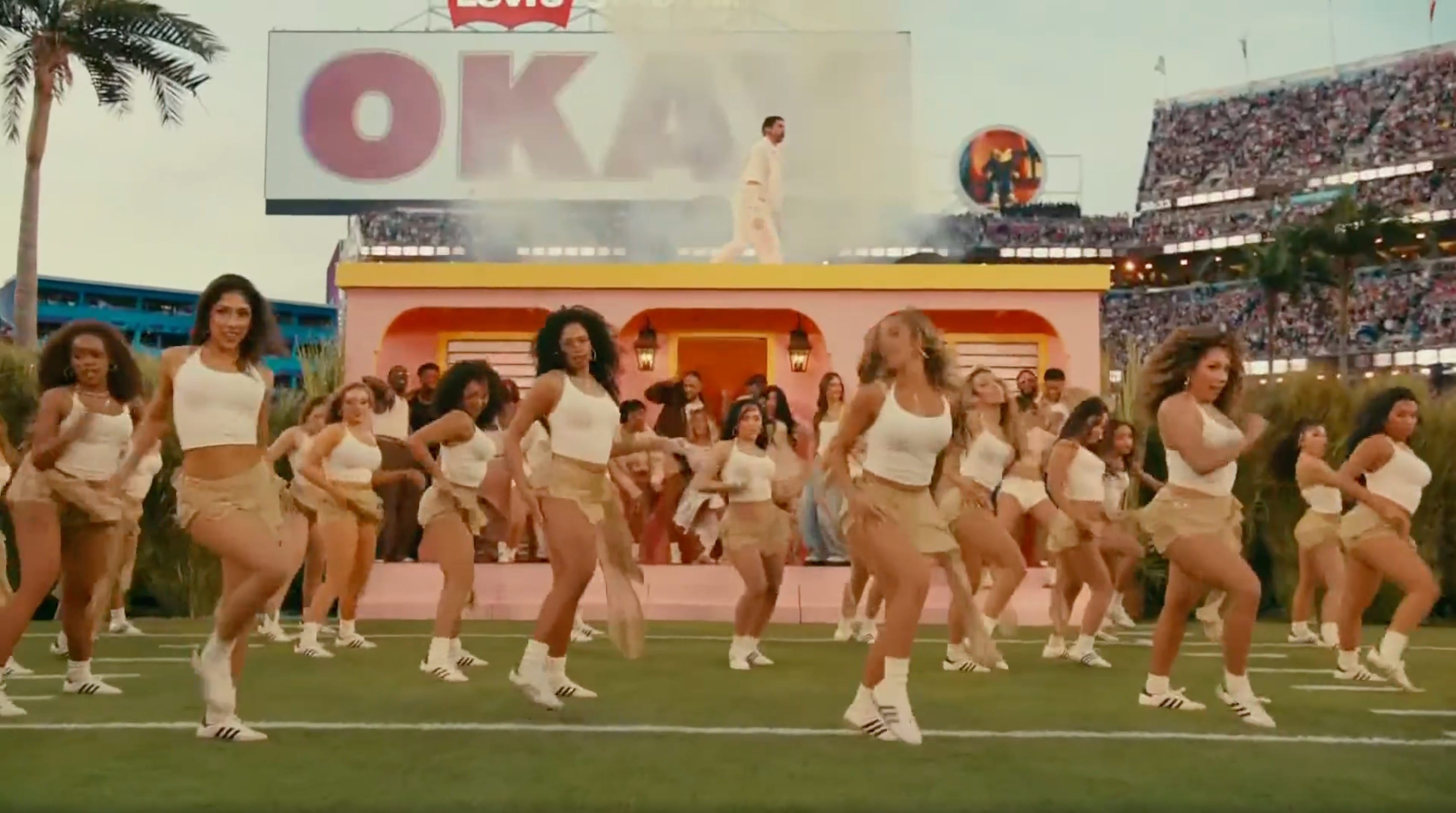
It was a visually arresting celebration of Latin America and Puerto Rico specifically: the coco vendors, the piragua stand, the dominoes, the boxers. La Marqueta and the barber shop. The beautiful brown women perreando in their power. (Trump called the dancing “disgusting.”) My eyes filled with tears as a special guest, the Puerto Rican singer Ricky Martin, sang Bad Bunny’s “LO QUE LE PASÓ A HAWAii.” Quieren quitarme el río y también la playa. Quieren al barrio mío y que abuelita se vaya.
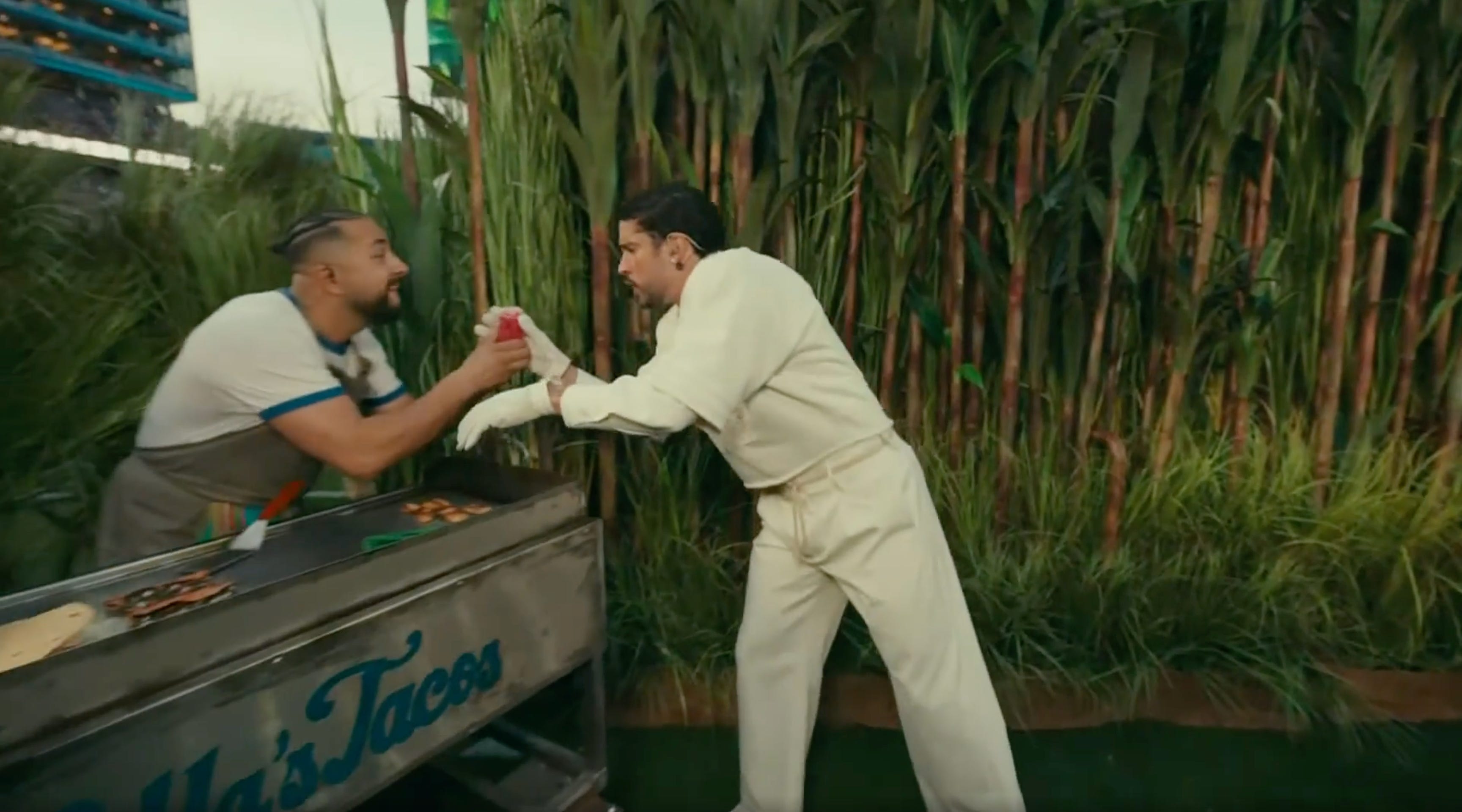
He was educating the world about the colonization of Puerto Rico that forced most Puerto Ricans, including my mother and most my maternal relatives, to leave the island. Today, most Puerto Ricans are diaspora in the mainland United States. Ricky Martin urged Puerto Ricans not to let go of their flag or forget their traditions.
The show featured some of Bad Bunny’s most anti-colonial songs, including “El Apagón,” about the blackouts that are common in Puerto Rico due to chronic neglect by the U.S. government and the U.S. corporations that occupy the island. Meanwhile, we saw jíbaros climbing and dancing on dilapidated powerline poles.
It was a breathtaking visualization of a reality that Trump and his allies are hiding behind nationalist rhetoric. I’ve previously written that Trump’s nationalism is a farce. He’s in league with transnational elites who want to extract and exploit the Americas, including the U.S., with impunity. That’s what his meddling in Honduras, Venezuela and elsewhere is about: an experiment in neocolonialism he wants to eventually bring to our cities. The proponents of this neocolonialism do not believe in nations or borders. In fact, they’re working to accelerate the global decline of nation states.
The biggest reason that Bad Bunny poses a threat to the MAGA movement is not that he inspires millions of Latinos like myself to reconnect with our roots and to feel proud. It’s that, in the process us offering us our power, he’s calling on us to resist the pillaging classes.
RELATED: Trump Is Not A Nationalist. He’s Something Worse.
Bad Bunny shows us that the fates of Americans across the Americas are entwined. His music asks us to resist the colonization of our minds and communities. Even the party songs he performed were political: centering brown joy in defiance of the federal agents who are detaining, deporting and shooting brown people dead.
One of the most powerful ways Bad Bunny is amplifying joy as resistance is by repopularizing salsa dancing and other Latin street dances. Those dances are radical because they create a strong sense of in-person community across race and class. And they’ve long been used in political resistance across the Americas, including in Puerto Rico. In my inaugural essay for Unsilencing, I wrote about rediscovering these dances thanks to Bad Bunny and how they helped me cultivate resilience.
As Bad Bunny danced salsa at the halftime show, I danced with my mother. It was the moment I’d most anticipated. His choice to dance “El Baile Inolvidable” with Lady Gaga, rather than a Latina artist, surprised me — but then I realized it was a deliberate choice in keeping with Bad Bunny’s vision of connection across difference, with his refusal to let love be constrained by nationality, language or race.
But the most radical message came in the first few seconds of his show. Its significance was likely lost on most viewers, but I want to bring it to your attention: before he even stepped on stage, he placed us in a maze of sugarcane fields, tended by laborers. It was a haunting image of Puerto Rico’s plantation economy shaped first by Spain, then by U.S. corporations — concentrating wealth off the island.
Later, the plantation economy morphed into a “special economic zone,” a rapidly multiplying form of territory with its own corporate-friendly laws, like looser environmental and labor regulations. (It’s what Trump brokered for Gaza in its cease-fire with Israel.) These tax havens, first tested in Puerto Rico, are where Trump and his Silicon Valley enablers want to build semi-autonomous cities run by corporations. (Trump’s recent pardon of a famous drug trafficker in Honduras is all about saving a semi-autonomous city there).
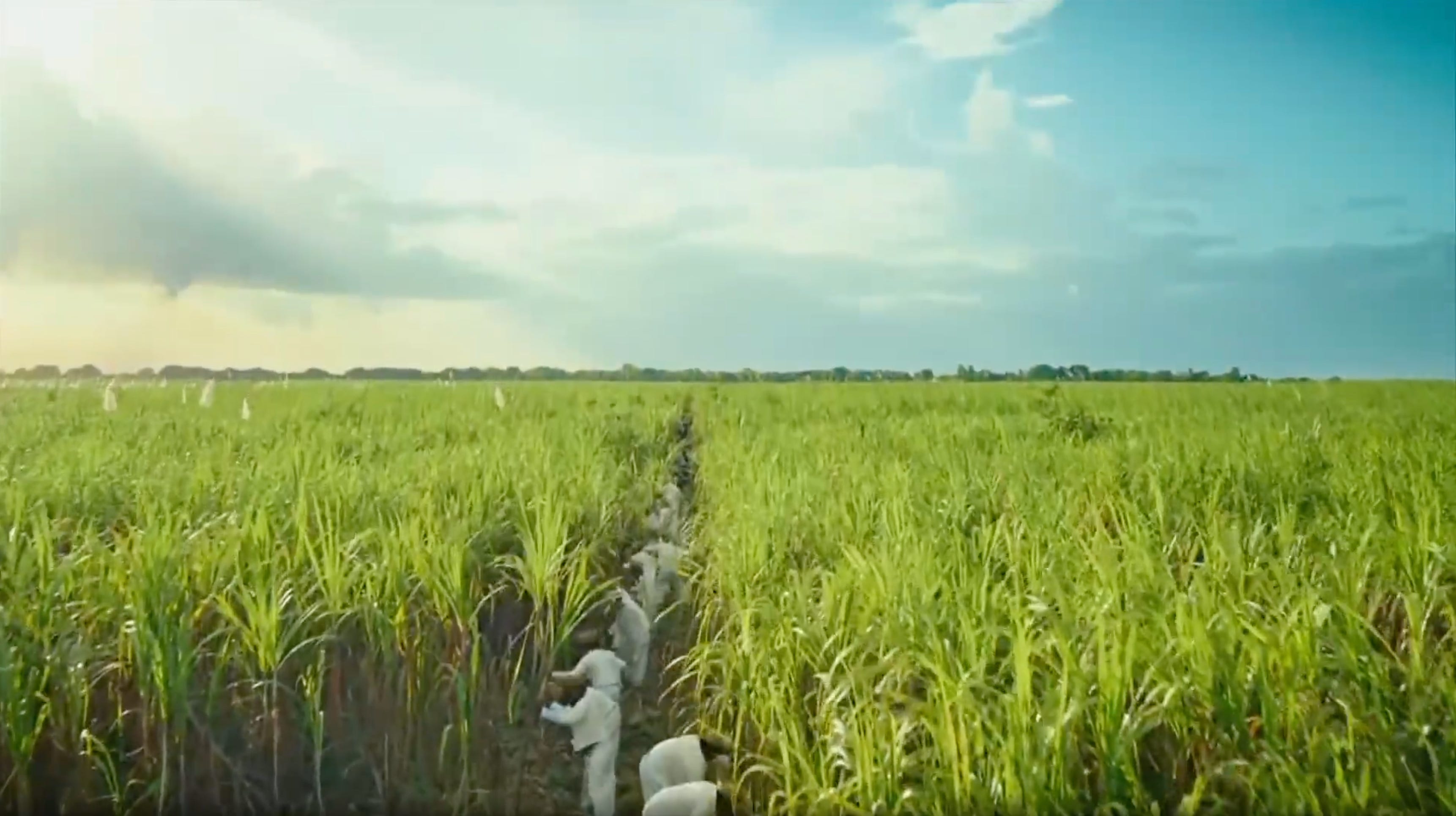
The political economist Patrick Neveling calls these zones the successors of the global plantation complex. Bad Bunny’s choice to start his show with visuals of that complex, and the cutters who endured grueling, underpaid work, was audacious. As a journalist who started her career as a commodities correspondent in Mexico and Central America, interviewing campesinos fighting displacement, I find it frustrating that I never hear mainstream public figures on either side of the political aisle acknowledge the ties between industrial-scale corporate extraction and migration. People shouldn’t be displaced, and shouldn’t have their land taken; I’ve advocated for the immigration debate to recognize not only the right to migrate but the right to stay. The concept was introduced to me by Miriam Miranda, a Honduran activist for the Afro-Indigenous Garífuna.
“It’s true that we have the right to migrate, but we also have the right to stay,” she told me. “Why does nobody ever talk about the right we have to stay?”
The reason we don’t hear about the “right to stay” in the immigration debate is, I suspect, because elites in both parties benefit from a manufactured underclass. That’s why Trump is creating the conditions in Latin America to fuel new long-term waves of vulnerable immigrants, at the same time as he’s deporting the immigrants who’ve accumulated some power in the form of U.S.-citizen children, homes and jobs.
The right to stay is far more radical than the notion of open borders embraced by some progressives. As I wrote in The New York Times, “A politics that celebrates movement while ignoring displacement serves capital, not people. Its logical endpoint is a world where we all become migrants — where communities everywhere are hollowed out again and again so that extraction can continue uninterrupted.” You don’t hear Democratic or Republican politicians advocating for the right to stay because it would require acknowledging the harms of U.S. corporate extraction.
Now Bad Bunny, the most powerful artist alive, is dragging this long-buried idea out of the soil into the light. His music is all about the right to stay.
At the halftime show, he powerfully asserted that right. It was in the strength of his stance on the stage, despite calls for his deportation and disparagement. It was in the flags, the dancers, the full weight of Latin America and Puerto Rico claiming their space in the world. As he whispered at the camera for us to believe in our power, “vales más de lo que piensas,” he was also saying: you have a right to stay. We have a right to stay. “Seguimos aquí,” he said at the end of the performance. We are still here.
Then he held out a football. On it were the words: TOGETHER WE ARE AMERICA.
You write the beauty I feel in my heart!!! The first time I saw Bad Bunny I just didn’t understand the name so I was intrigued. Instantly, I was pulled in by his confidence, his charisma. This half time controversy only deepened my interest. Then I saw a special about him that impressed me so much. He’s not just a singer, a flashy, good looking man. He is a sincere person. He is part of his community. He didn’t leave and move to LA, and sell out. I saw a man that was profoundly committed to his country and his people and you cannot help but respect a person like that.
Jean, you have broadened my understanding even further. You have me wanting to learn more about Puerto Rican culture, how the USA has pillaged it, disrespected it, and its people. To understand better the whole perspective of what’s happening right now with Venezuela, Gaza etc. I think I need to read your books. I feel so unaware as a fellow American as to what has happened to Puerto Rico. It’s not ok, I need to do better. But I WANT to do better and I thank Bad Bunny for that. He is someone to bring people of different backgrounds together I hope. Thank you for your beautiful writing! 🙏
So beautifully expresses.. thank you!!! Viva !!!